
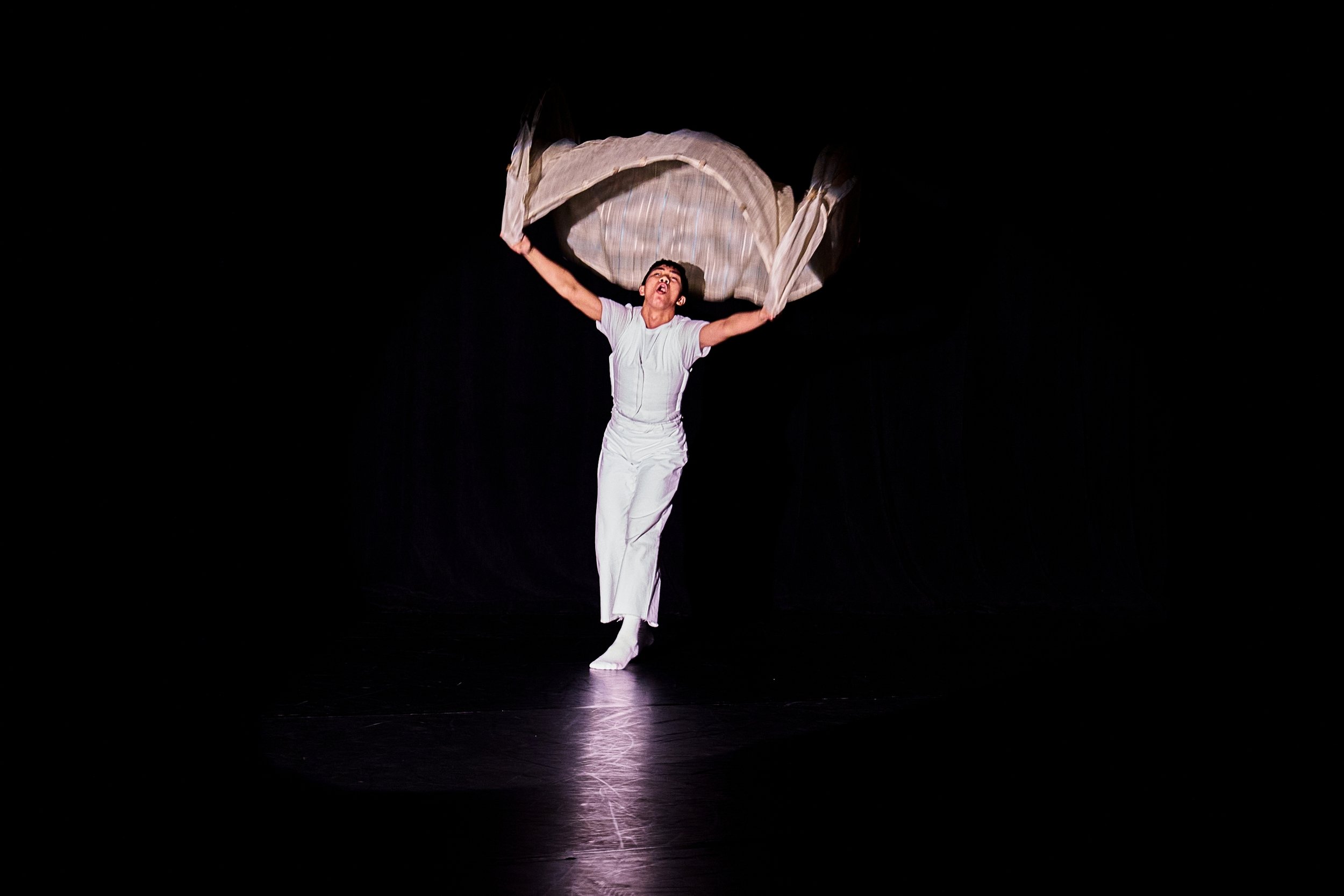
PIÑA is an interdisciplinary dance work that explores constructions of diasporic identity and how the body carries history and ancestry in a globalizing world. Inspired by Artistic Director Ralph Escamillan’s experience as a first-generation Canadian-born Filipino, this work considers the parallels between the physicality of this experience, and piña—a traditional and celebrated Philippine fiber made from pineapple leaves. The delicate yet resilient textile parallels the fragility and strength of contemporary diasporic people, and by investigating the many facets of this culturally embedded textile, an anthropological journey through the body is created. Incorporating traditional folk dance, history, music and costume, the political, economic and social dimensions of contemporary diaspora revealed.
Ang PIÑA ay isang pinagsama samang sayaw para tuklasin ang katawan sa mga nakalipas na panahon at nakasanayan ng ating mga ninuno. Dahil sa inspirasyon ng Artistic Director na si Ralph Escamillan bilang isang first-generation Canadian-born Filipino,. Inihahalintulad niya ang sariling karanasan sa tradisyonal na Nipis na gawa sa hibla ng dahon ng pinya. Ang maselan ngunit nababanat na tela ay tumutukoy ng kahinaan at lakas ng mga nangibang bayan. Sa pagsisiyasat sa maraming aspeto ng telang ito. At dahil sa nakasanayang kultura, ang isang antropolohiya sa paglalakbay sa katawan ay nilikha. Sa pinagsama samang tradisyonal na katutubong sayaw, kasaysayan, musika at kasuotan, ang politikal, pang-ekonomiya at panlipunang dimensyon ng mga nangibang bayan ay inihayag
CREDITS
Created by - FakeKnot
Artistic Direction and Choreography by - Ralph Escamillan
Dancers - Ralph Escamillan, Tin Gamboa, Raul Lorenzo “Buboy” Raquitico Jr, Danah Rosales, Justin Calvadores (Swing)
Costumer - Robyn Jill Laxamana
Assistant Costumer - Julay
Lighting Design - Gabriel Raminhos
Original Music and Sound Design - Kimmortal
Dramaturg - Denisa Reyes
Piña Textile - Raquels Piña Cloth
Stage Manager - Kayleigh Sandomirsky
PIÑA is produced by FakeKnot, and co-produced by the National Arts Centre.
FakeKnot gratefully acknowledges the support of the Canada Council for the Arts, the British Columbia Arts Council, the City of Vancouver, SFU Woodward’s Cultural Programs, The Dance Centre’s Artist-in-Residence program, Toronto Dance Theatre, Far Eastern University (Manila), Dance Victoria, and Vancouver Asian Canadian Theatre. A special thanks to Joyce Rosario.
PAST PERFORMANCES
March 27-30, 2025 / PIÑA performance at Tangente Danse - Montreal, QB
March 22, 2025 / PIÑA performance at Toronto Dance Theatre - Toronto, ON
November 16/17, 2023 / PIÑA performances at the National Arts Centre - Ottawa, ON
May 4-6, 2023 / PIÑA Premiere at the Fei Milton Wong Experimental Theatre
January - March, 2023 PIÑA talk series #2
June, July & November 2022 / Philippine residency at FEU (Manila)
March 28 - April 8 2022 / The Dance Centre - Artists in Residency (AIR)
January 2022 / Dance Victoria Residency - Dance Days
July-November 2021 / FakeKnot Learning Series: Piña
October 12-15, 2021 / Residency - Toronto Dance Theatre
May 13, 2021 / Vancouver Art Gallery: Art Connects Talk
PROCESS
The process of creating PIÑA started in 2019, right before the start of the pandemic. The initial inspiration for this work were the fashion codes Ralph was exposed to while he was growing up, and what informed him a what his cultural dress was - specifically Barong Taglog and the Terno. With this he leaned in the textiles used to create these garments, known as “nipis” fabircs that ranged from piña fibers, abaca, tree fibers, and silks. The most of expensive was piña, known as the Queen of Philippine fibers - that came from the Spanish bringing pineapples to the islands, where native weavers took it and made it their own.
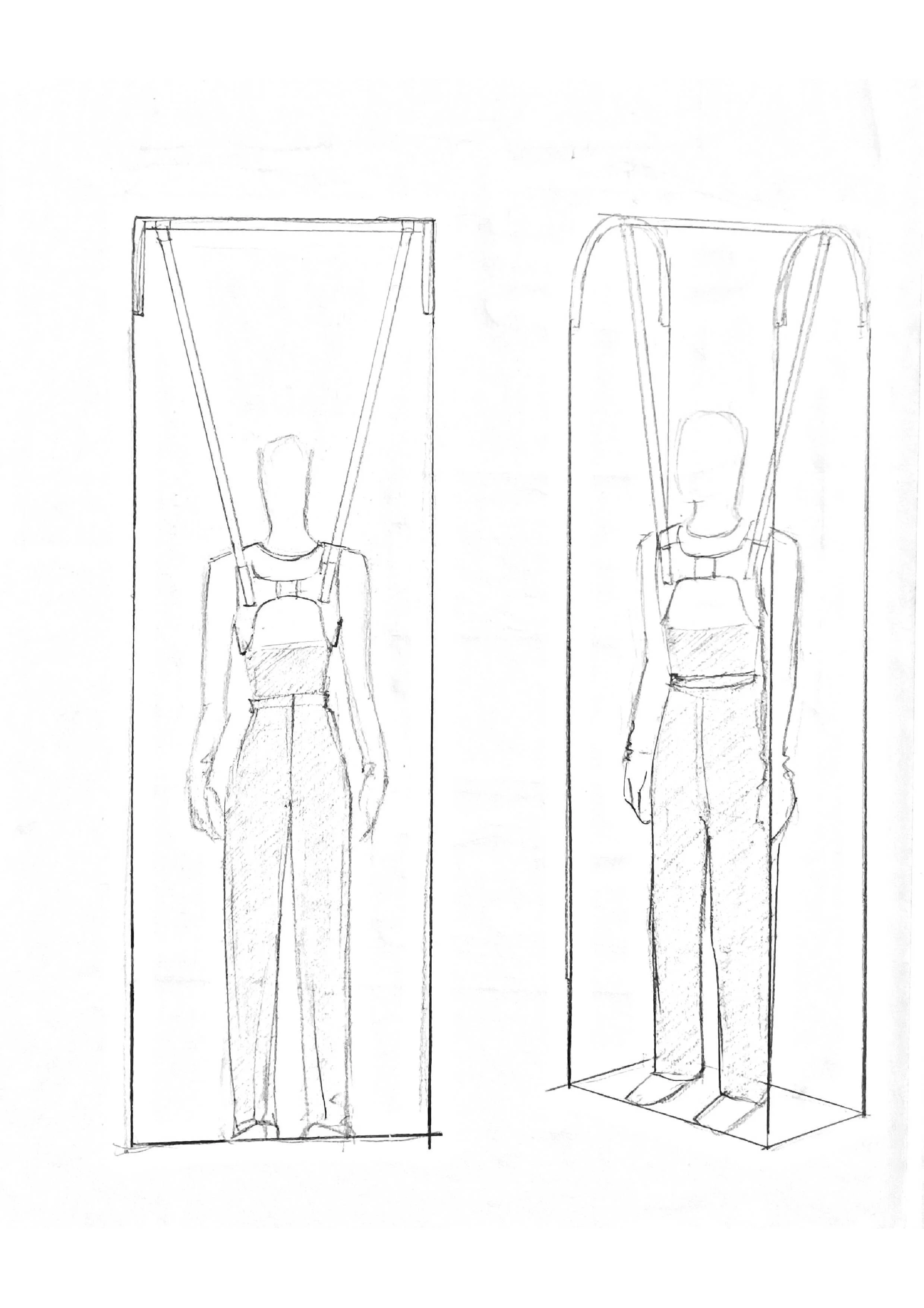
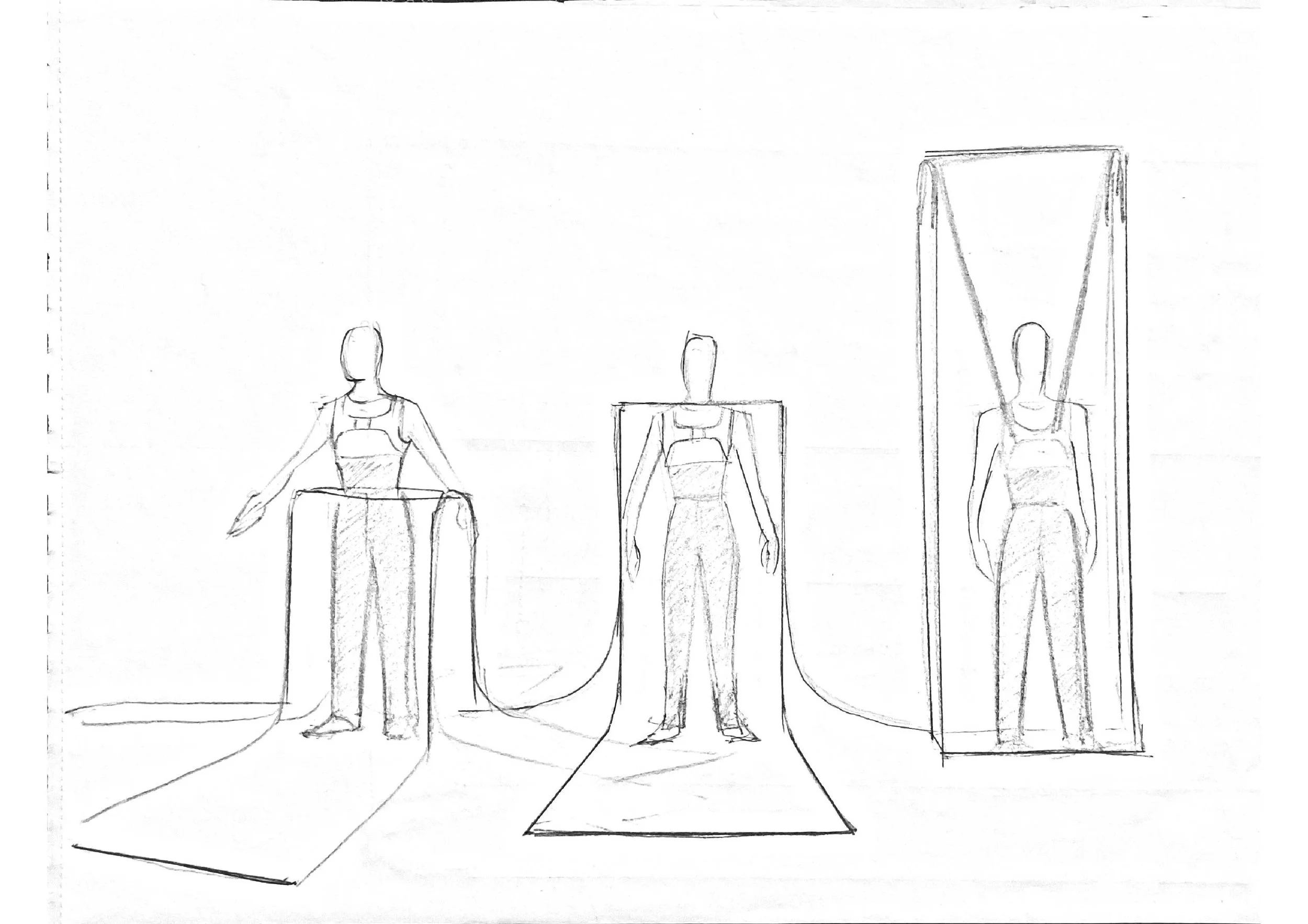
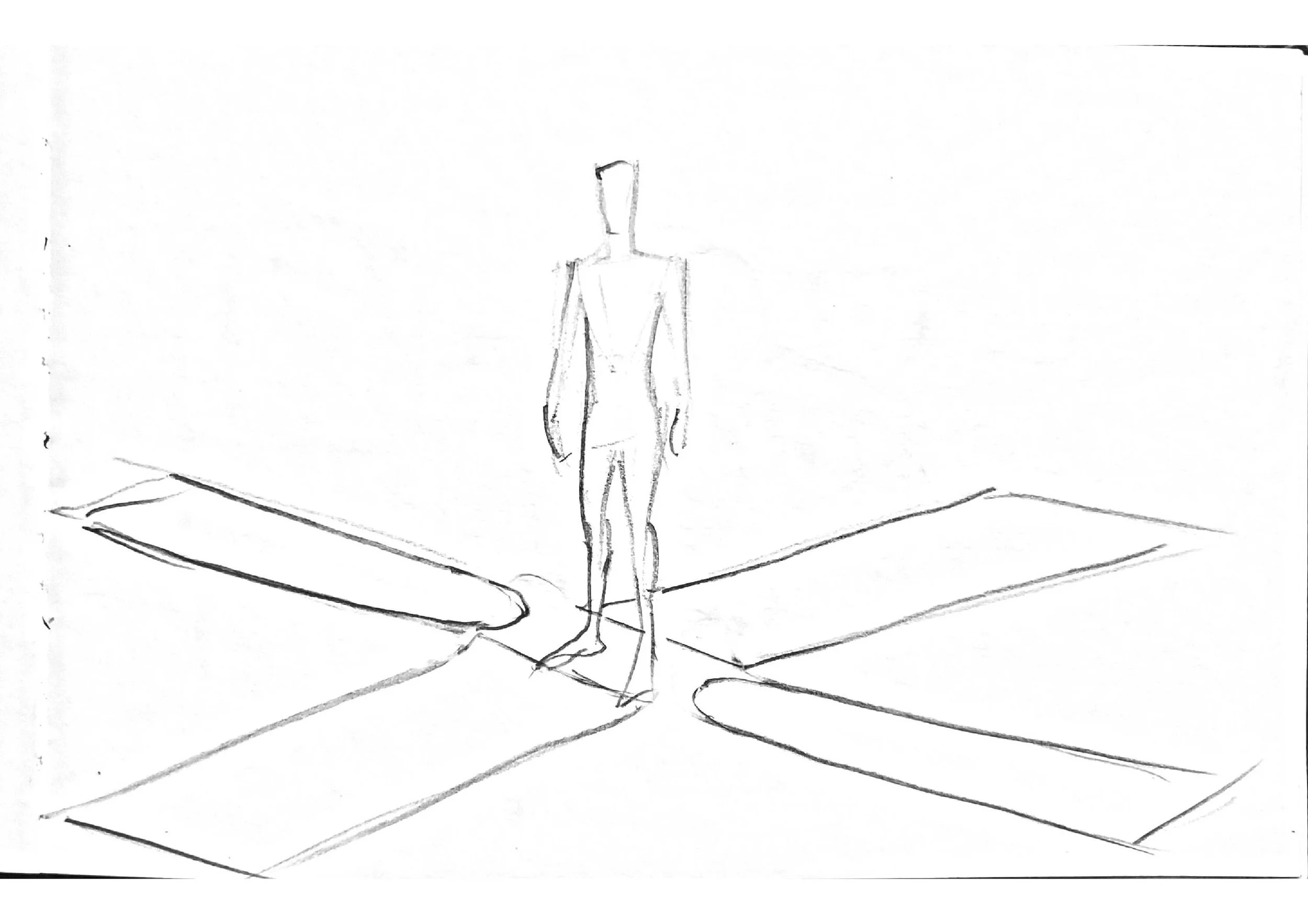
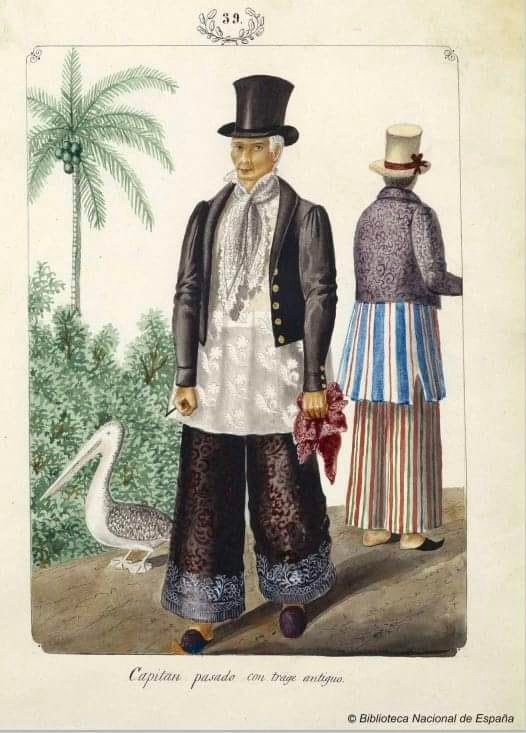
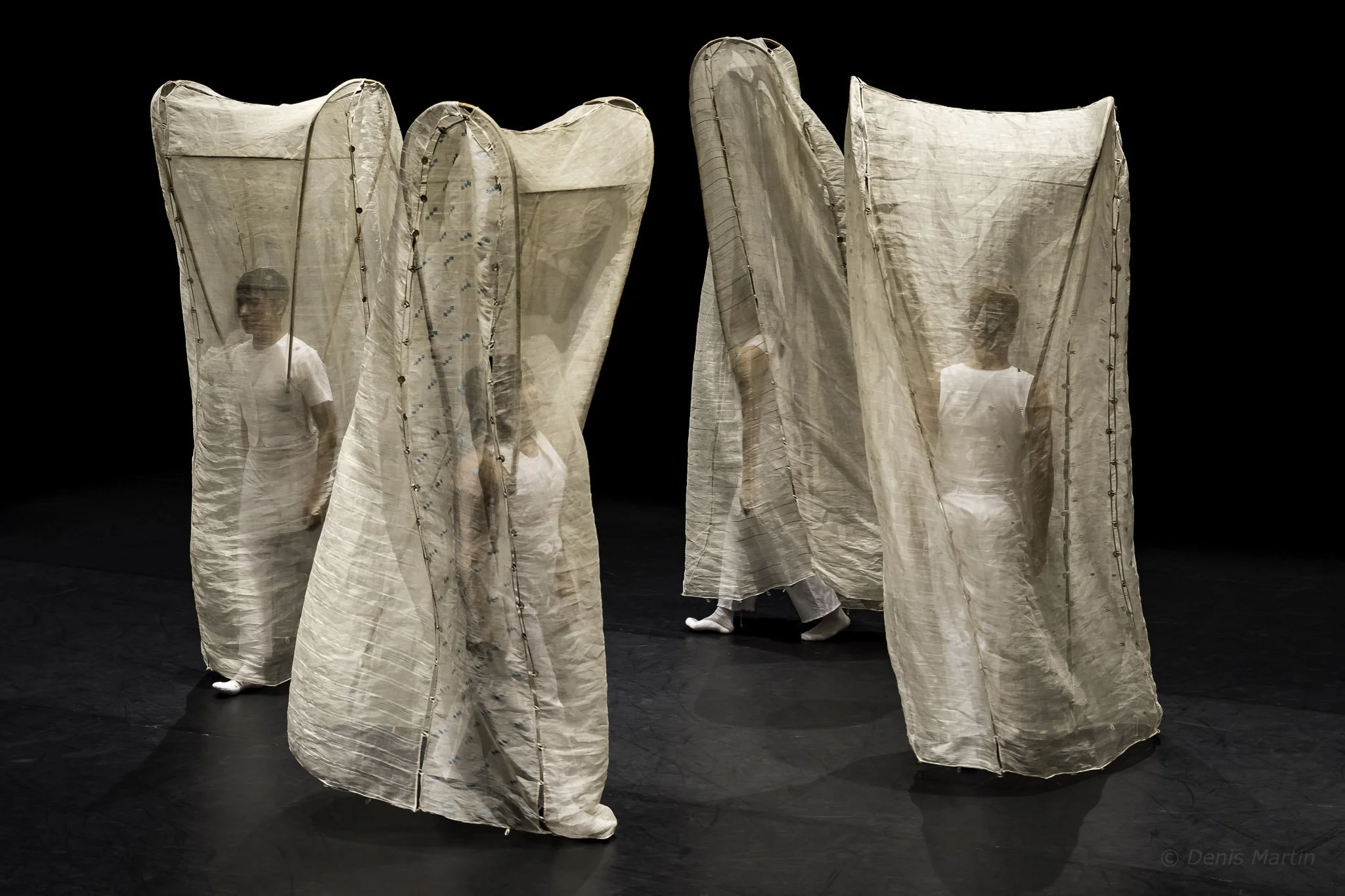
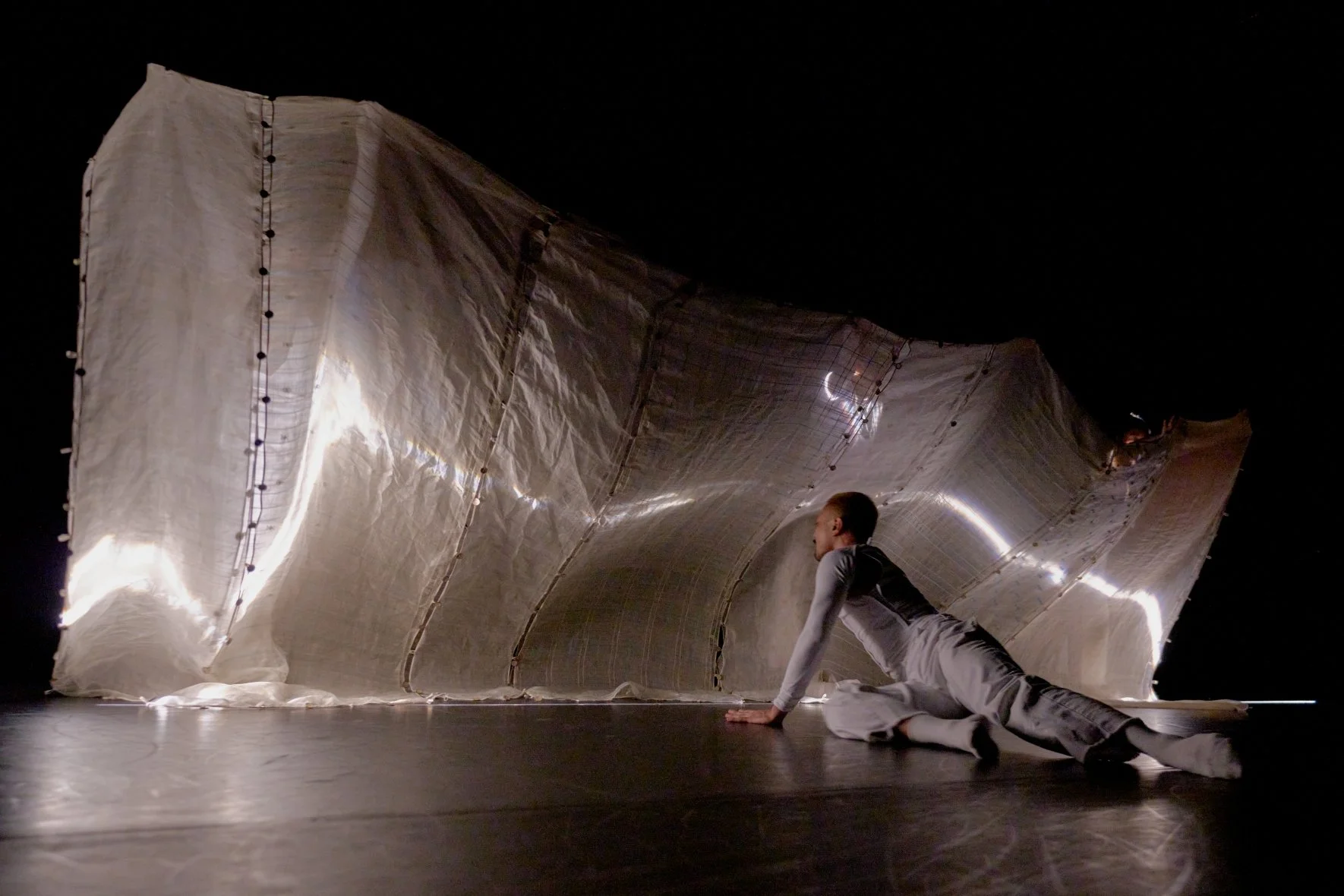
In collaboration with long time costumer Robyn Jill Laxamana, the two created a modular garment they affectionately called the “Terno Towers”. Made out of bent bamboo, coconut shells and the piña textile - the costume piece transforms through out the work, becoming costume, backdrop and in an end tableau an image of the philippine islands.
PIÑA Textile
Ralph reached out to Habi Fair - Philippine Textile Council, and was directed to award winning piña weavers Carlos and Raquel Eliserio of Raquels Piña Cloth. A 5 generation piña weaving family, they are known for some of the most expressive weaving in the country, and also are a lifeblood to their community in Aklan, Kalibo. As one of very few that know how to properly extract piña leaf fiber in the country, they also supply raw fibers around the archipelago. In 2022 Ralph was able to visit the Carlo, Raquel and the rest of the Raquel’s Piña Cloth community to learn more.
During his visit he was able to learn the extracting, weaving and knowing process that goes in to making the final piña product. The phyiscalty of plucking the leaves, scraping the leaves, hitting them to make an indent, pushing the shuttle in the weaving process, and knoting the fibers was interpreted as the movment the language for final work.
LIGHTING AND IMAGRY
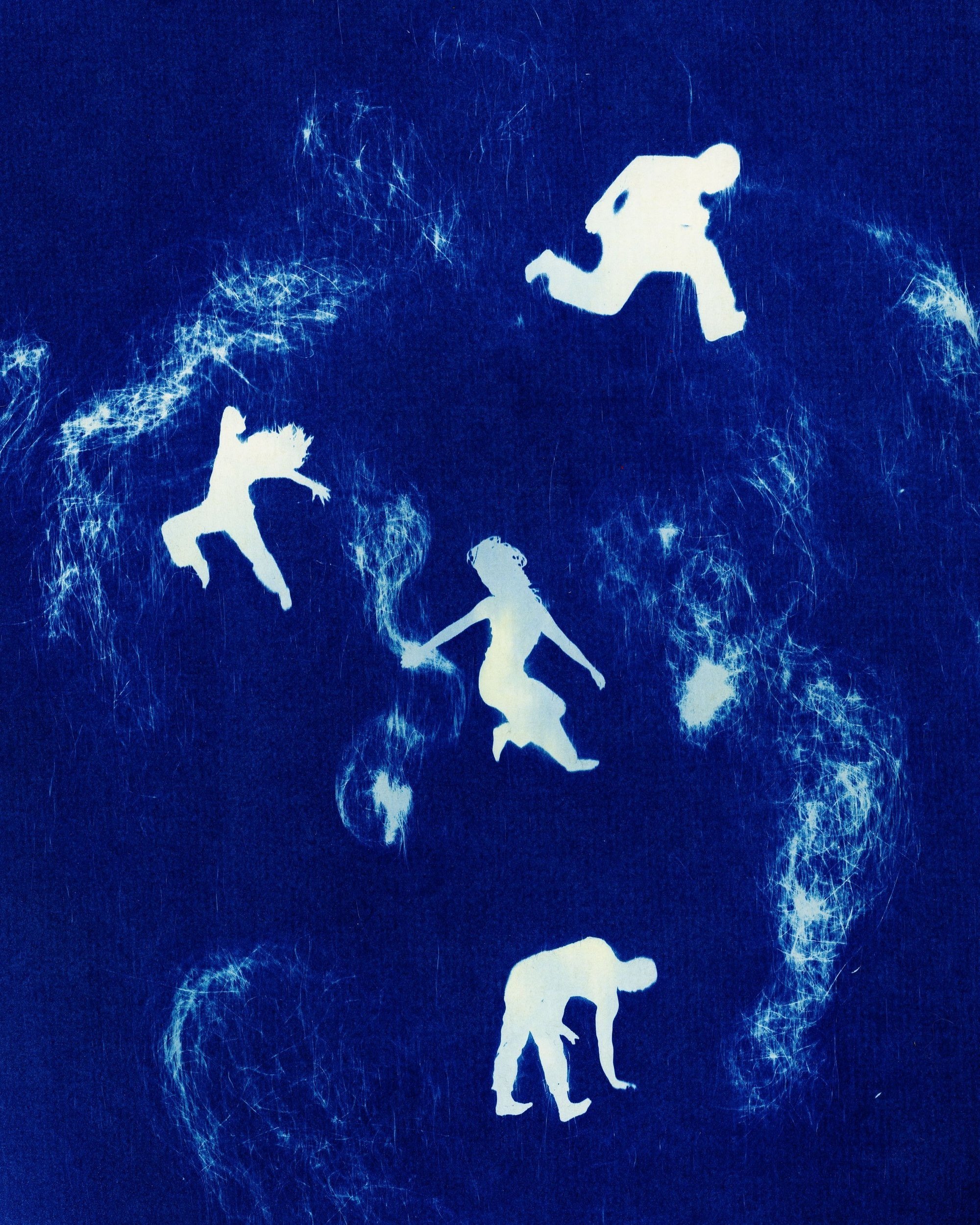
Inspired by Neil Oshima’s photograms of filipinana Ralph brought these inpsirations to both Lighting Designer Gabe Raminhos, and Photographer Rydel Cerezo.
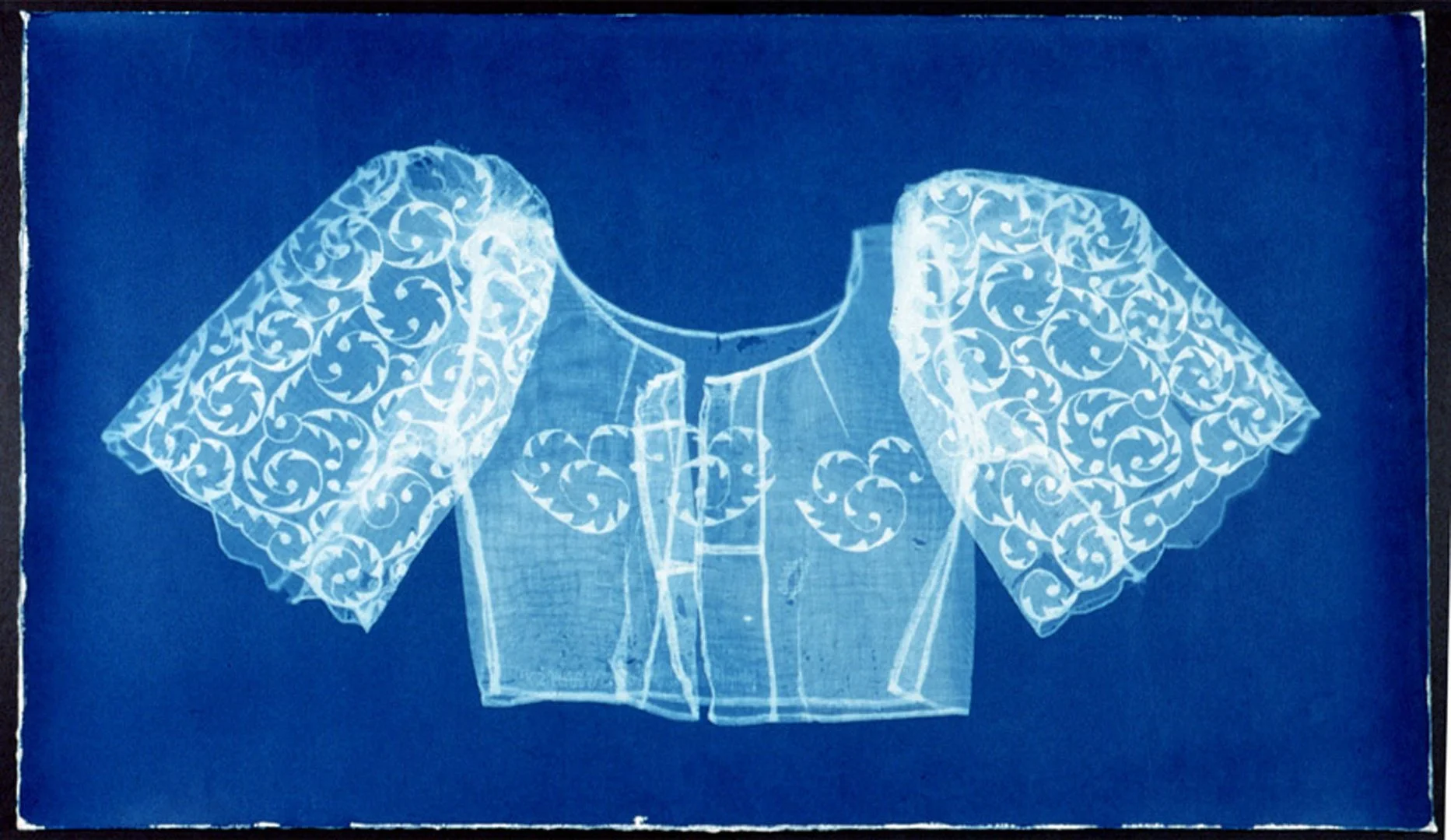
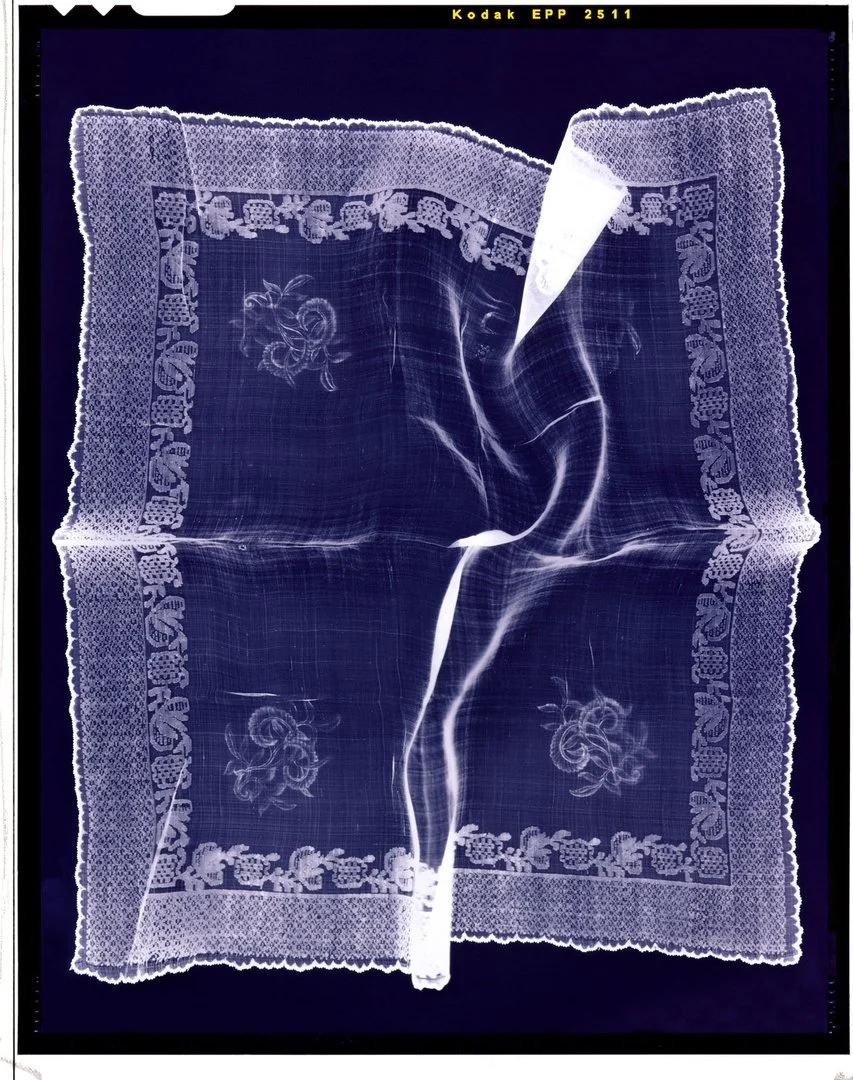
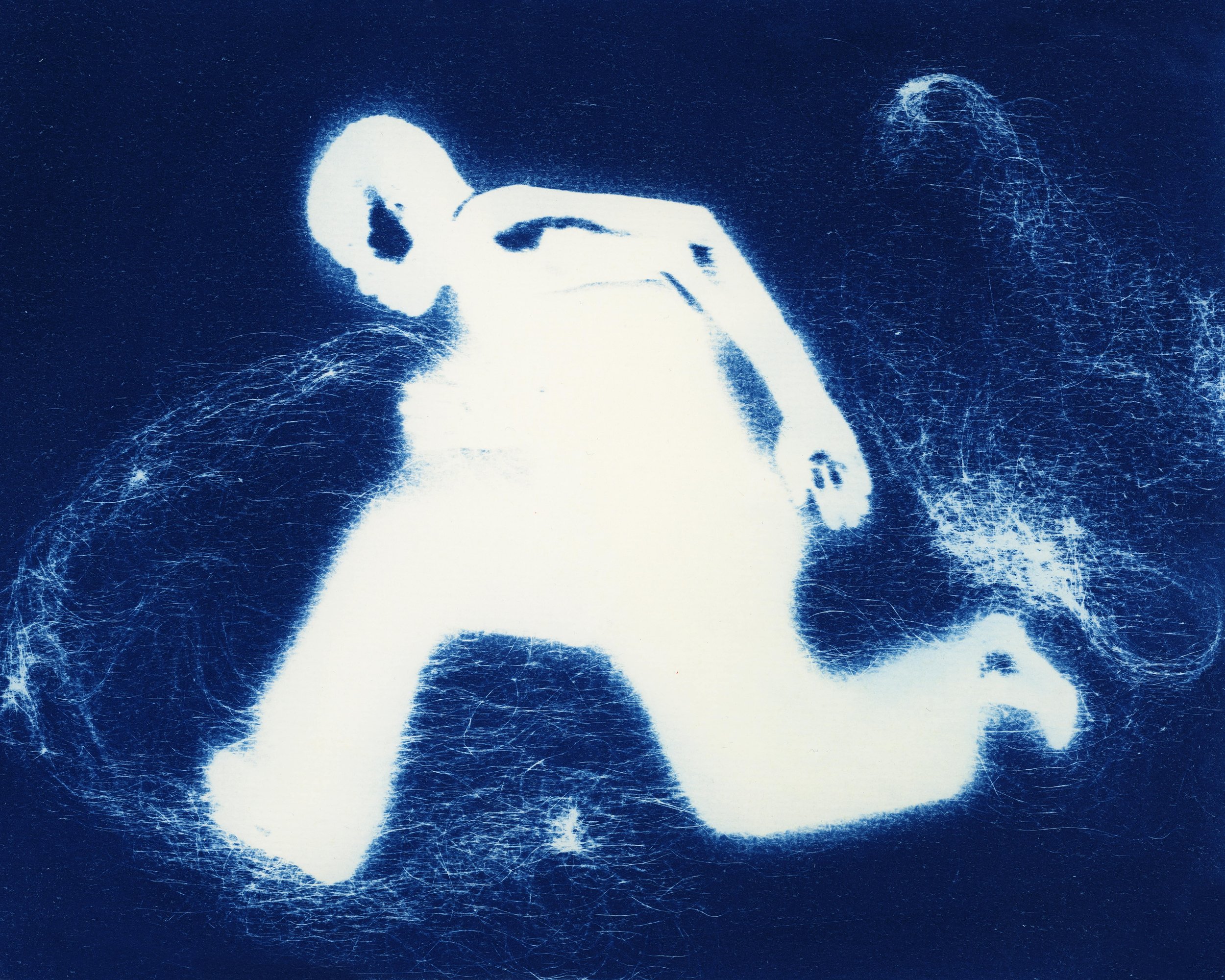
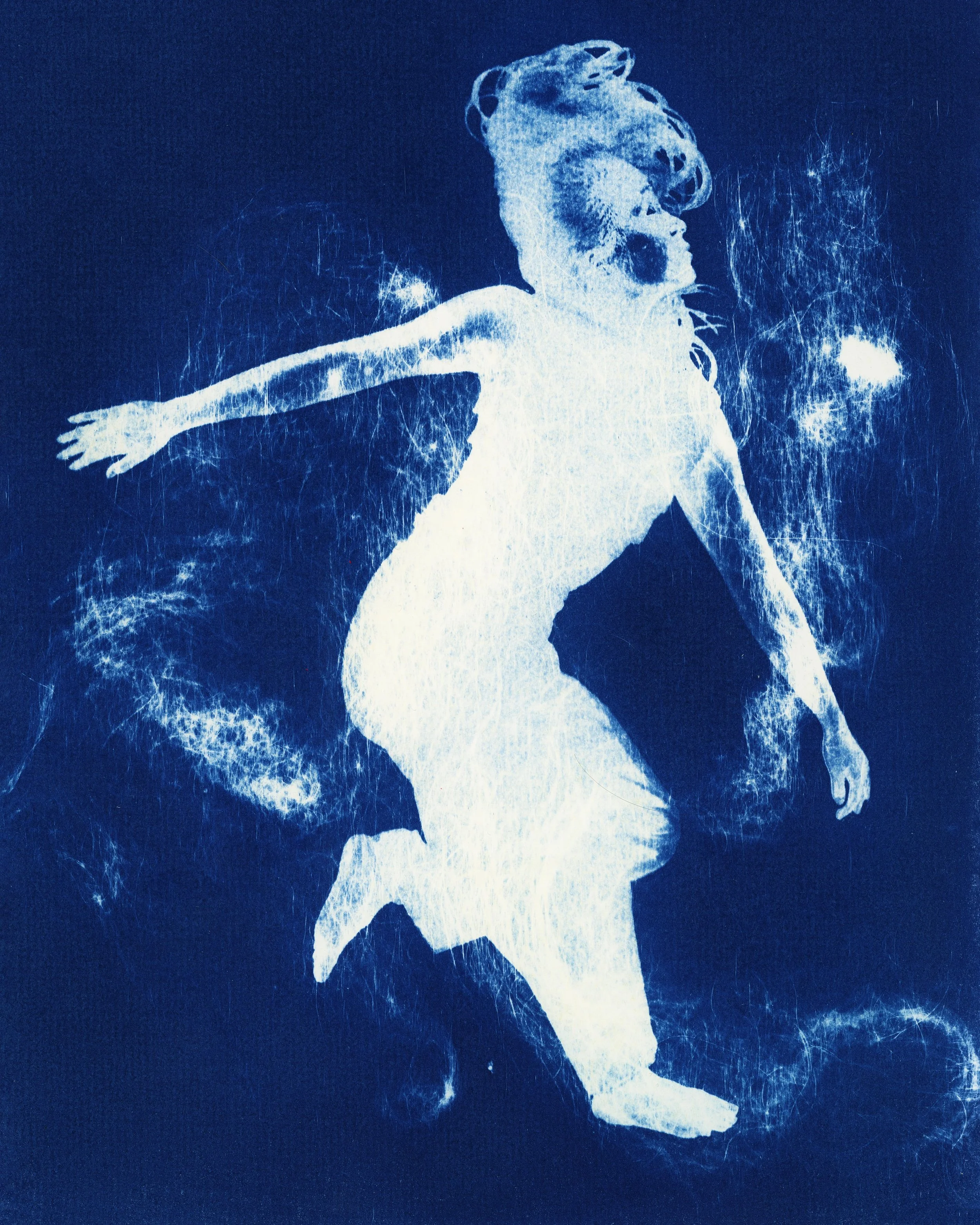
Cyanotypes by Rydel Cerezo featuring dancers Tin Gamboa and Ralph Escamillan. (2023)
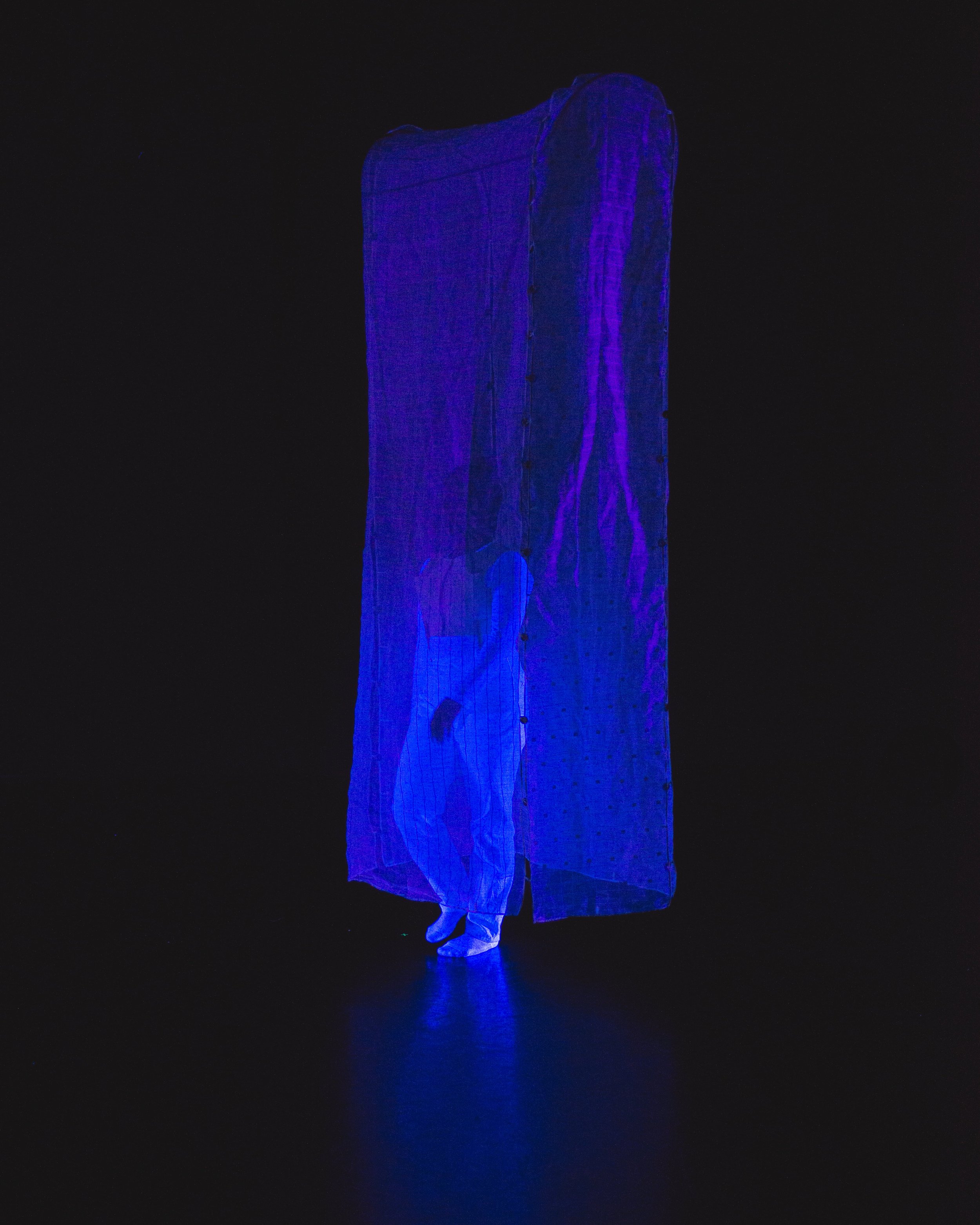
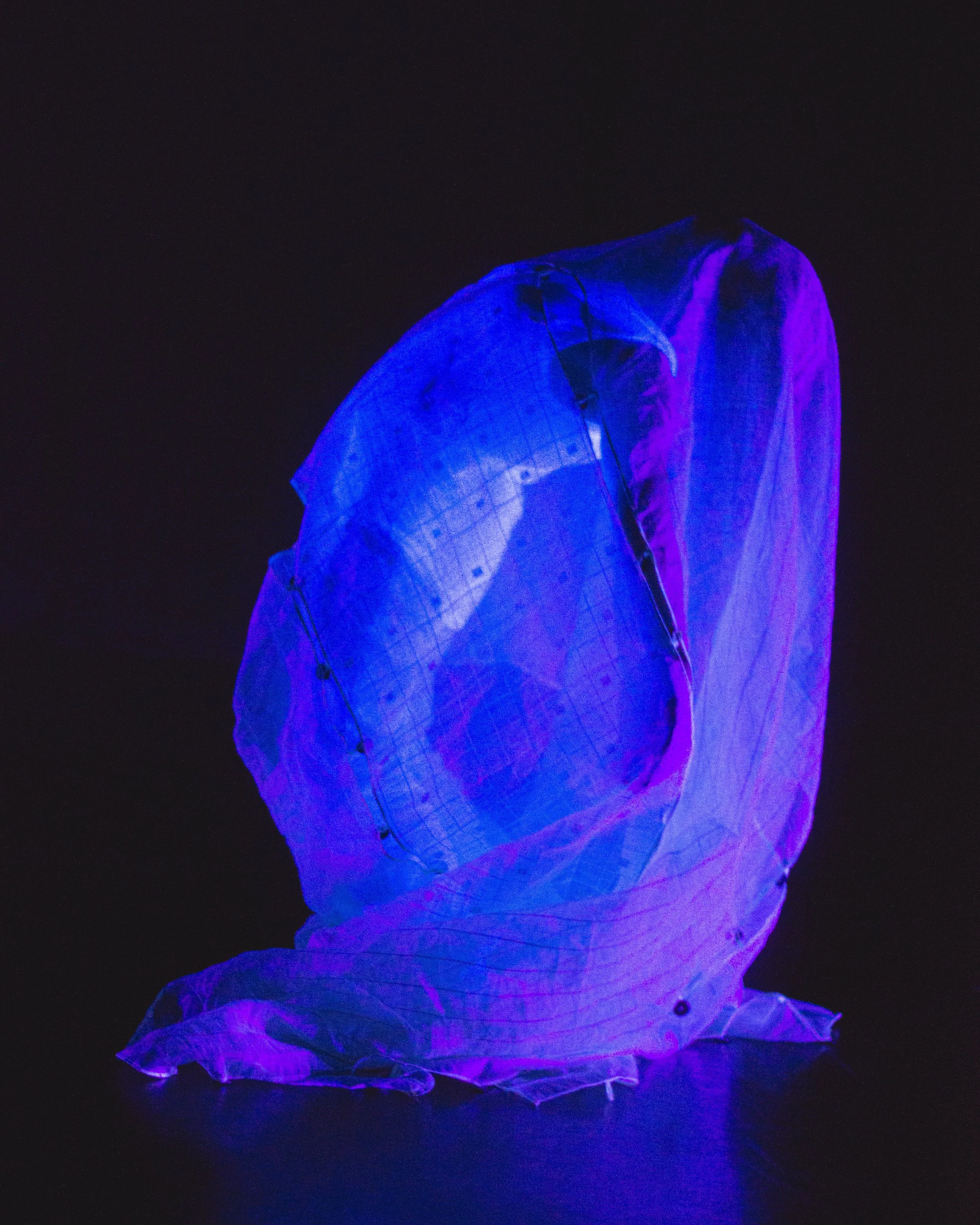
Photo by Rydel Cerezo featuring dancers Danah Rosales and Tin Gamboa, with UV lighting by Gabe Raminhos.
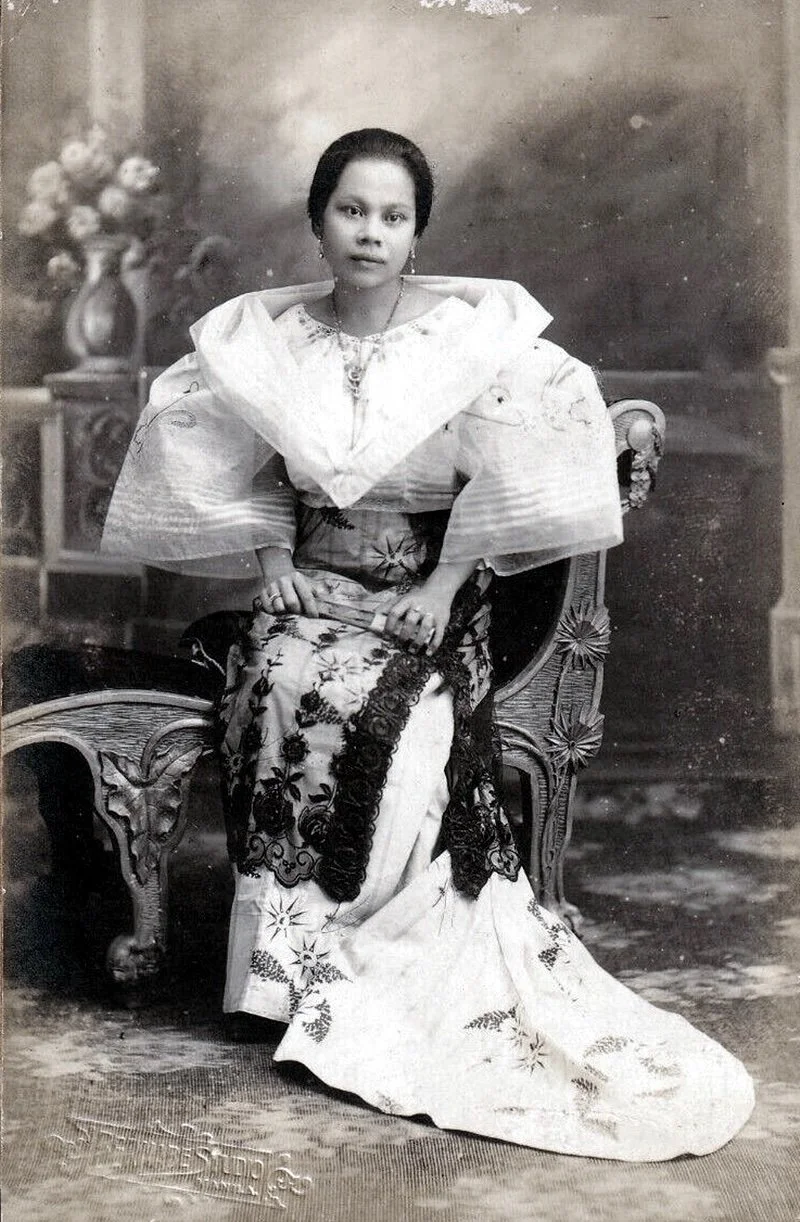
Pulling inspiration from Traditional Philippine Folk Dances that wore Terno and Barong, Ralph enlisted the support of Peter and Dr.Patrick Alcedo. With their support Ralph learnt about the history of the Rigodon De Honor, a dance done to emulate the court dances of Europe - which later became used for fashion shows, and more commonly today for Debuts (coming of age celebrations) and Weddings.
Philippine Folk Dance
FakeKnot Learning Series: Piña (2021-2023)
FakeKnot Learning Series is an effort to expose the creation process and allow research for projects to be accessible to the public. This series is an extension of the current research of the Philippine textile piña - both in its anthropological and contemporary histories. This project was supported by Dance Victoria, Canada Council for the Arts and BC Arts Council in 2021 + 2023 HABI: Philippine Textile Union, The City of Vancouver, the BC Arts Council, the Canada Council for the Arts, and in association with vAct’s Spring Board Series.

MINI FIESTA and EXHIBIT
As a way to anchor the performance with local community, and also bring the world of celebration as if you were entering a family gathering - the performance of PIÑA is connected both a Mini Fiesta (1 hour before the performance) aswell as small piña exhibit.
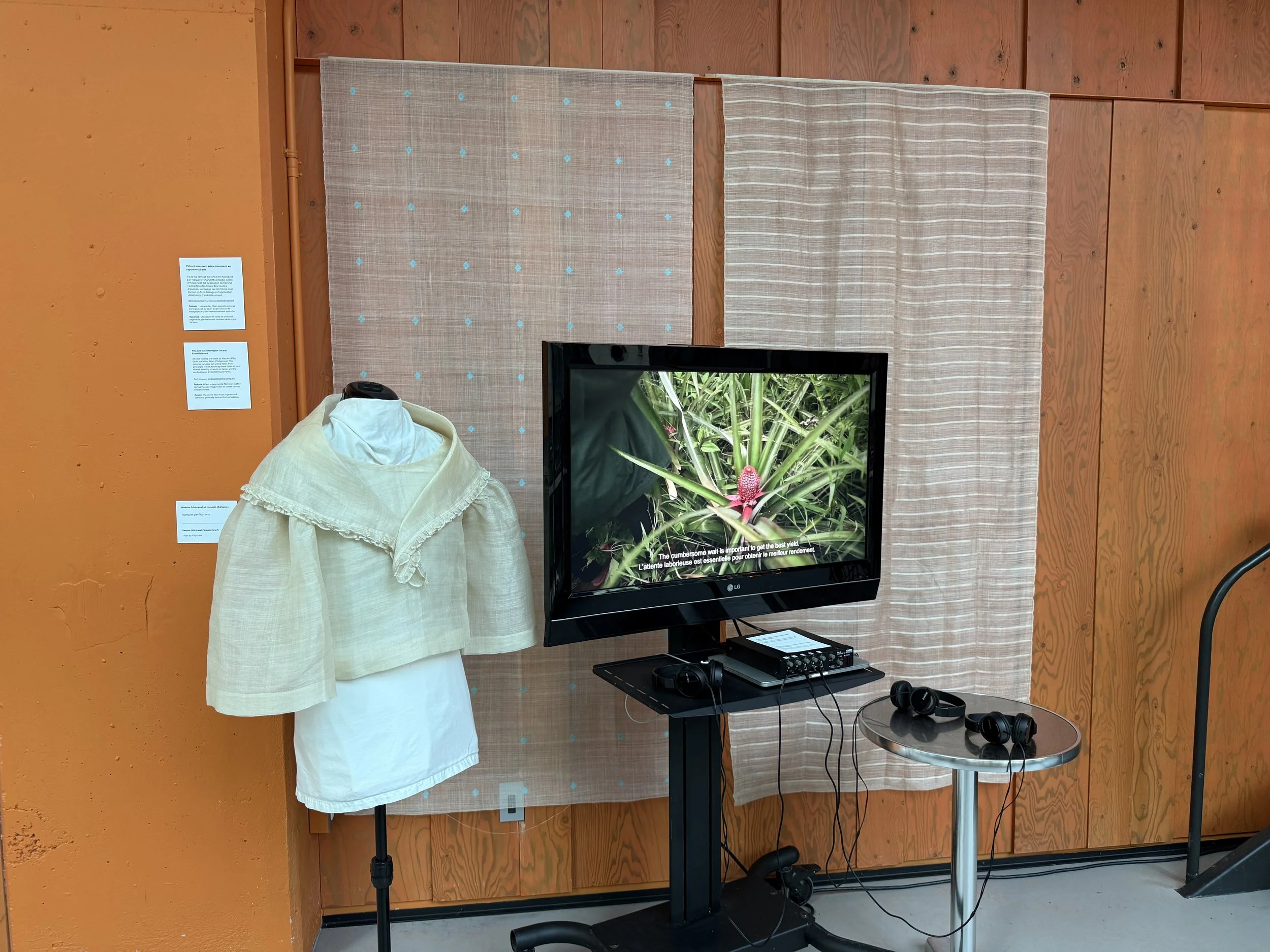
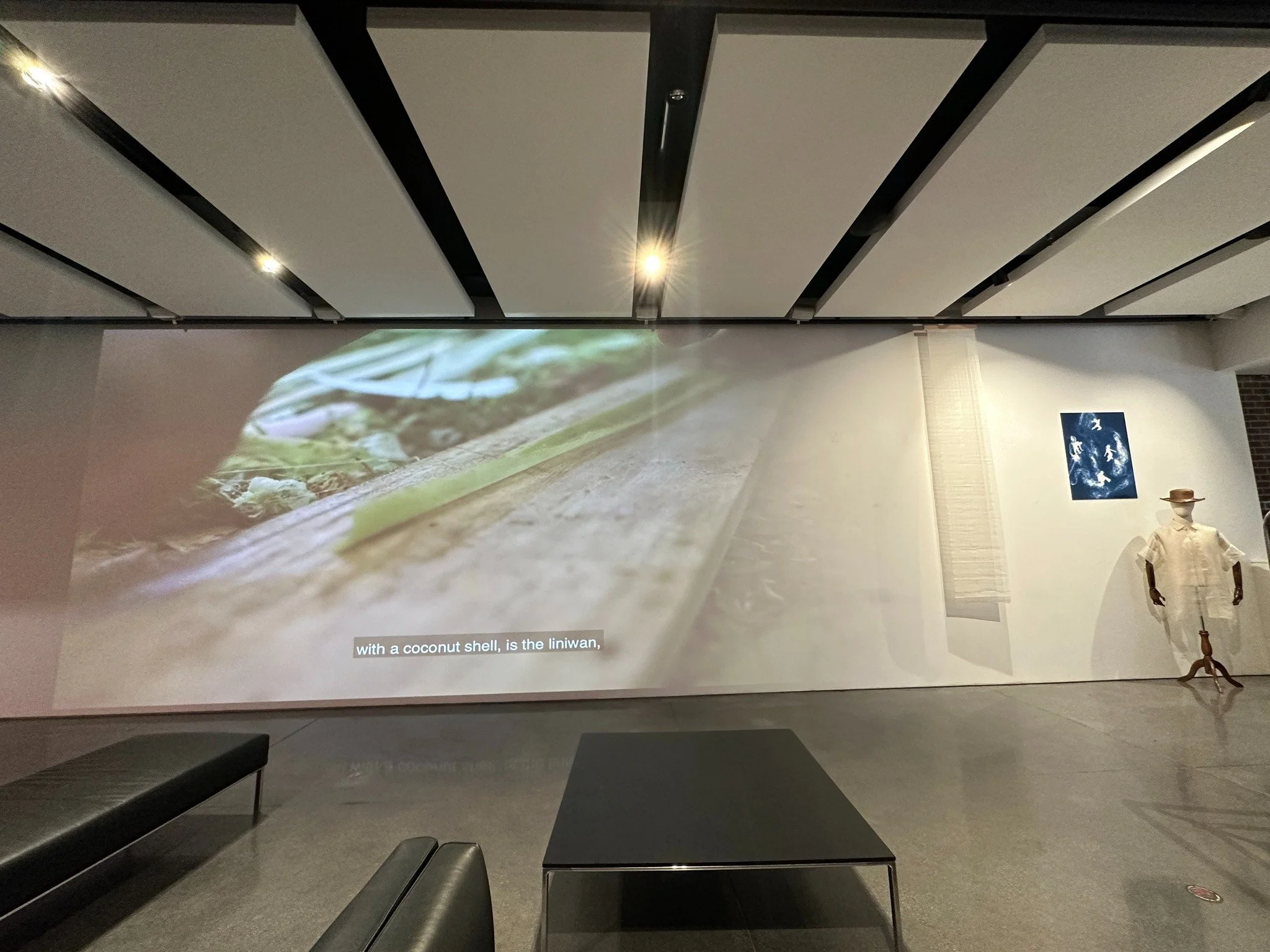
The exhibit features a documentary about piña and weavers of Raquels Piña Cloth made by Director Lune Mendoza, panels of piña fibers, a bust with either a terno or barong dress, and print out cyanotype images.
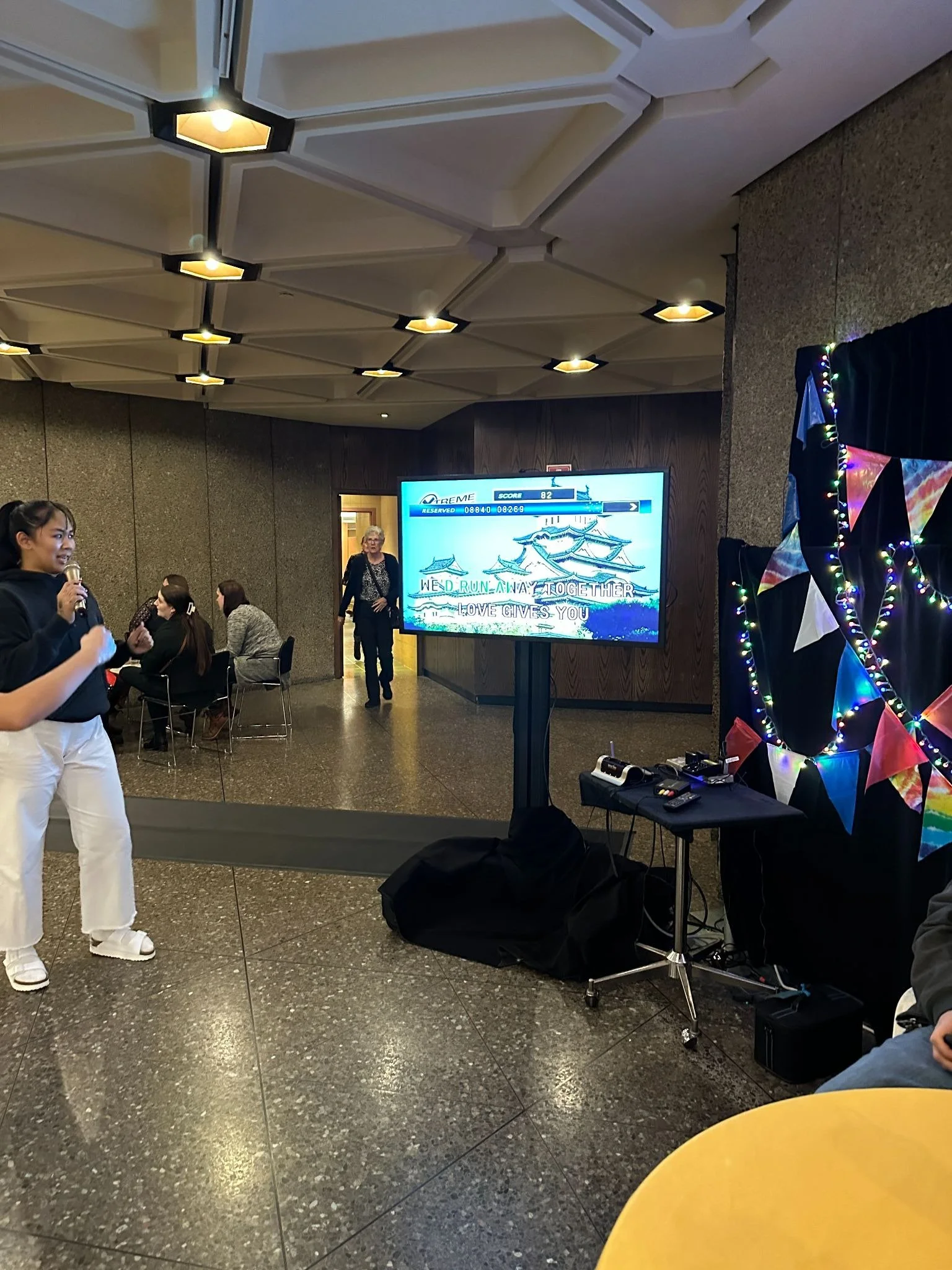
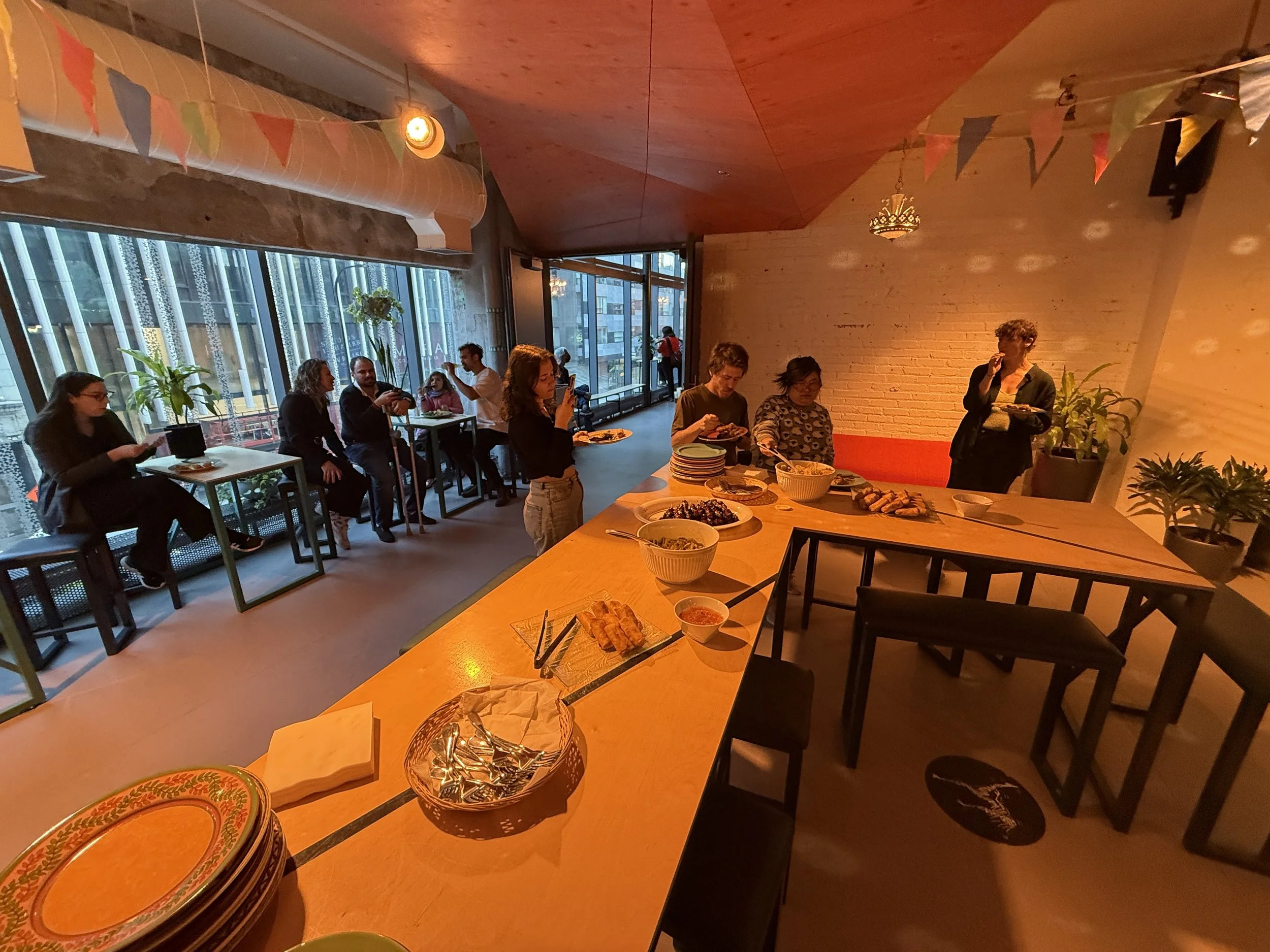
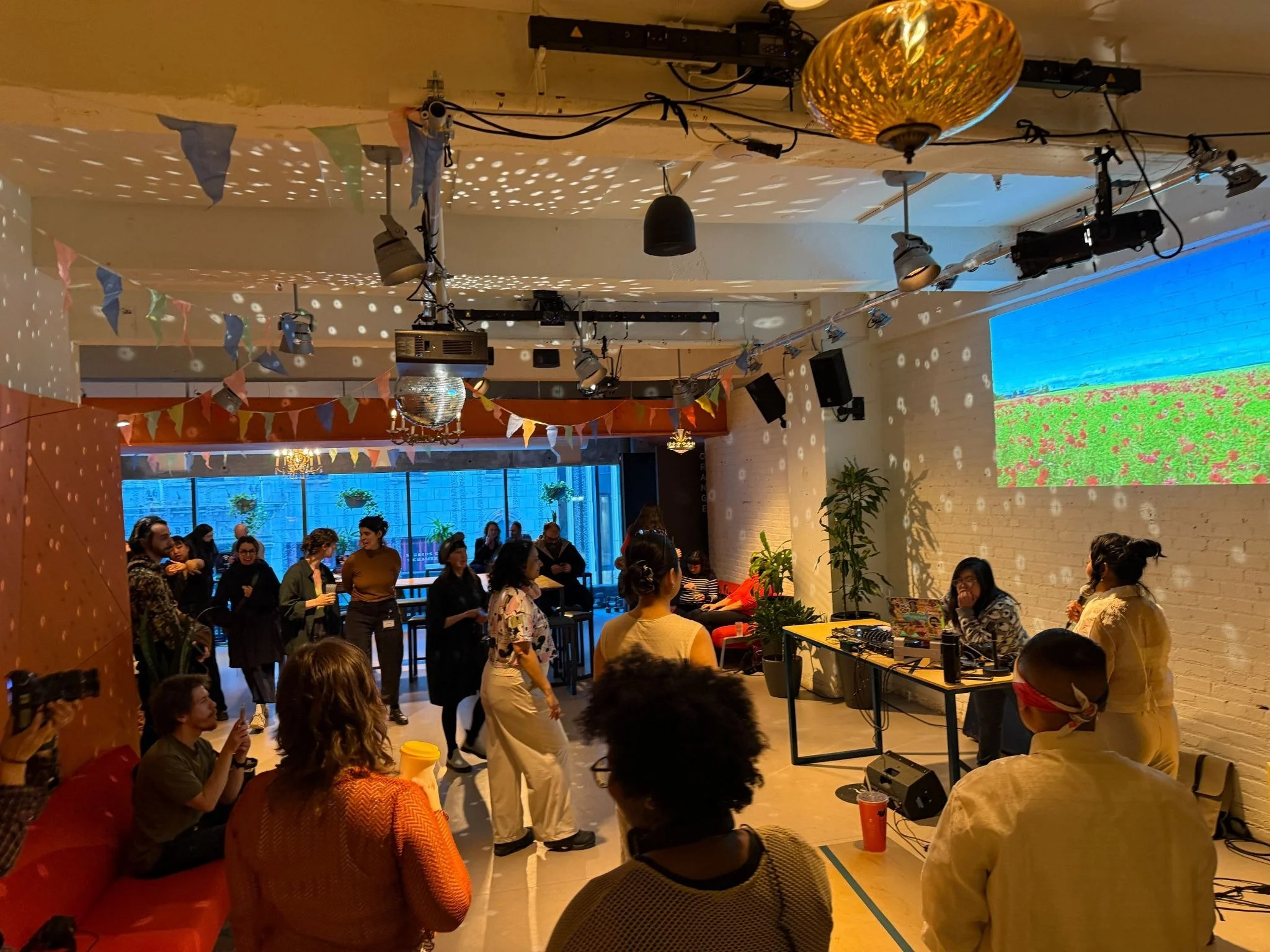
The fiesta becomes a collaboration with partnering presenter, and takes form of catered philippine party food - with an adjoining karaoke station (SFU, NAC, TDT performances) or DJ (Tagnete performance).
PUBLICATIONS
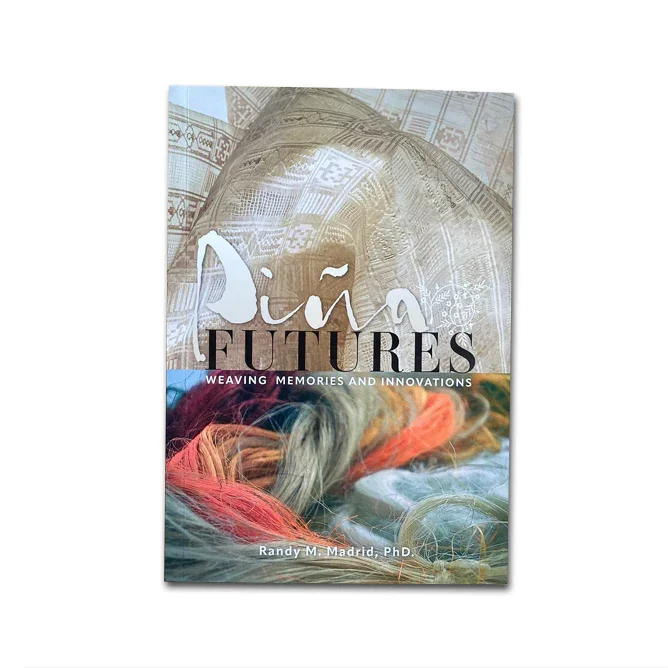
PIÑA was featred in Dr. Randy Madrid’s book “Futures - Weaving Memories and Innovations” published in 2023. Copies of the book can be purchased at the Habi Fair website here.